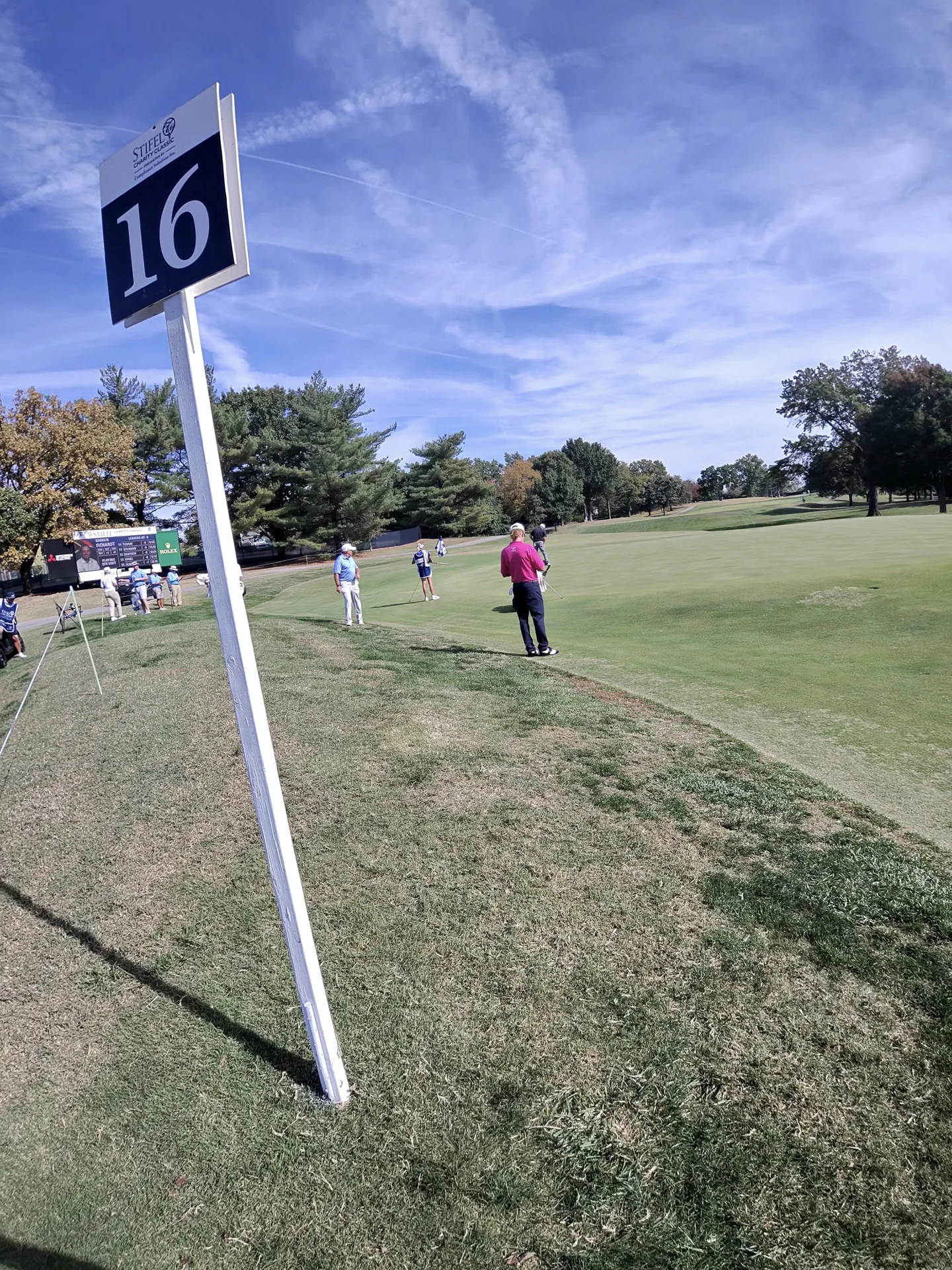
“This is my office this week.”
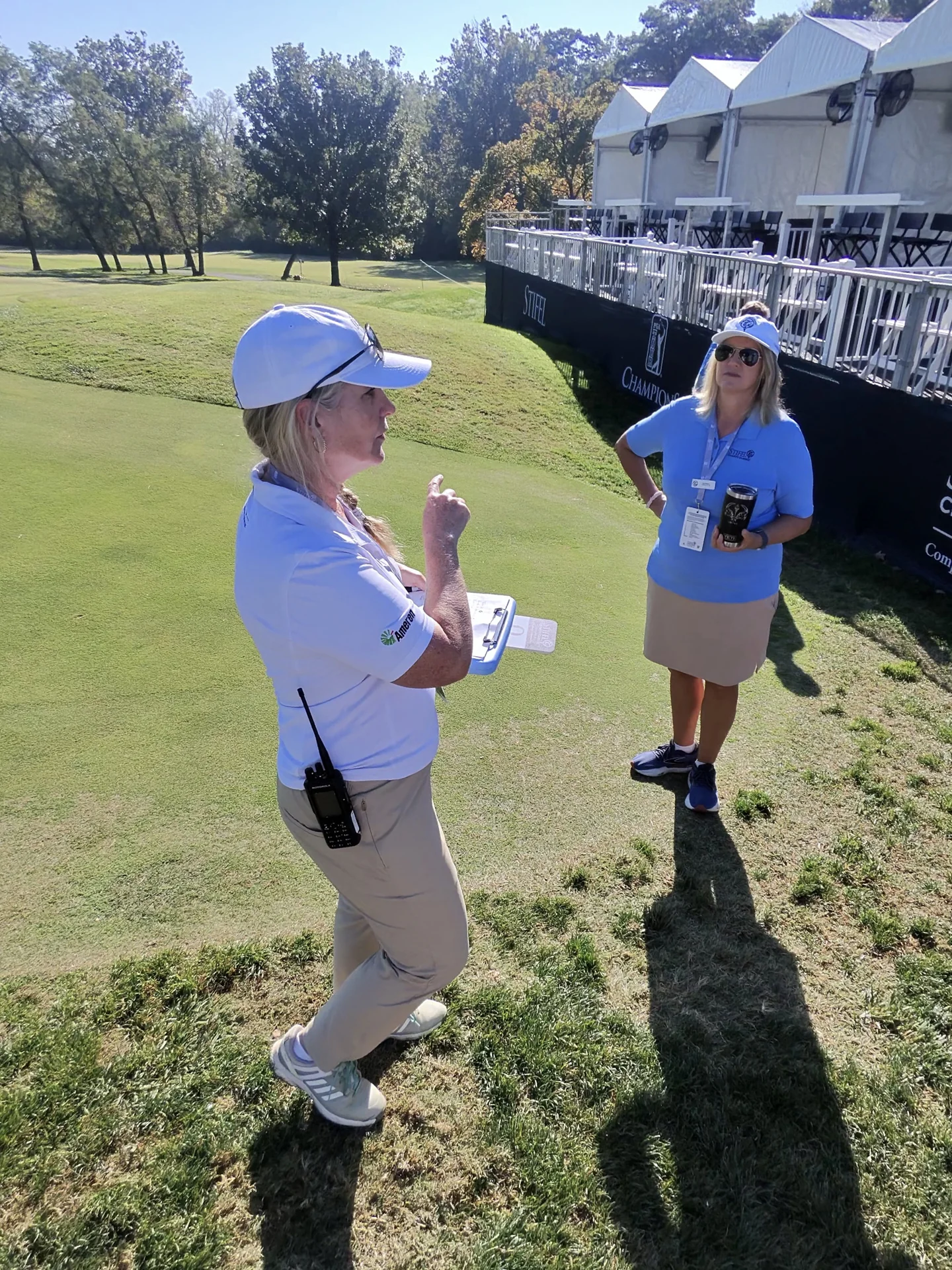
That was my introduction to Hole 16 at Norwood Hills Country Club during the 2026 Stifel Charity Classic presented by Compliance Solutions. For three days—Wednesday’s pro-am, Friday’s opening round, and Sunday’s final round—I helped marshal the same hole and watched the week change around it.
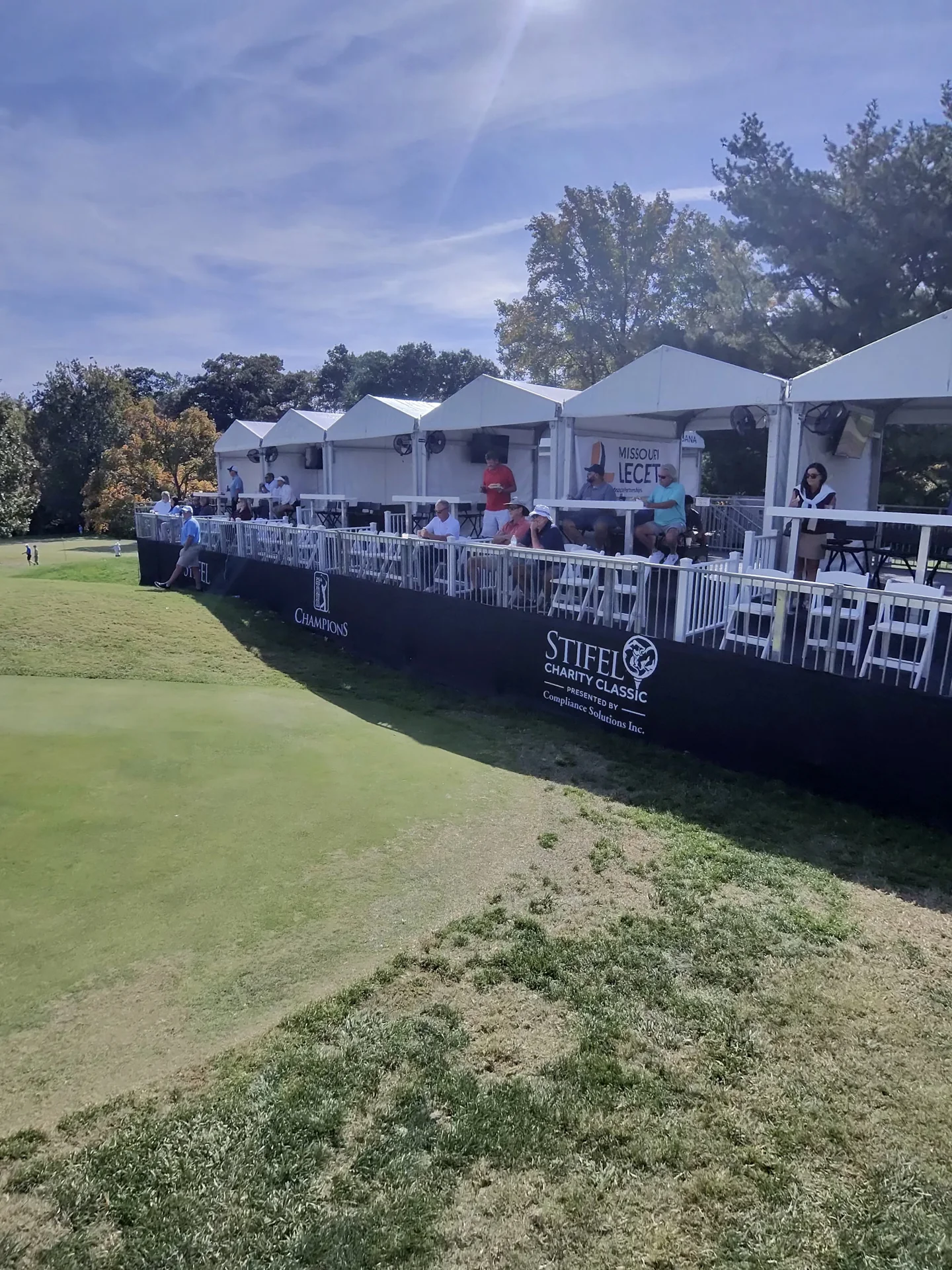
Wednesday had no public spectators. By Sunday, the hospitality cabanas had company, the tournament was on the line, and our volunteer crew had settled into its rhythm.
Would I do it again? Yes. I plan to be back next year.
What the $95 actually bought
My 2026 volunteer uniform package cost $95 and included a jacket, shirt, stocking cap, and visor. By my estimate, those items alone were worth more than $200.
That made the package a good value before considering the experience: professional golf up close, meals during my shifts, and time working with people who enjoy the game as much as I do.
There is a commitment attached, of course. You have an assignment, teammates depending on you, and players trying to do their jobs. Come prepared to help, and the golf becomes a pretty good benefit.
Getting there: give yourself extra time
My first recommendation is simple: arrive early on your first day.
In 2026, I parked at UMSL’s Millennium Garage North and took the shuttle to the course. From there, I still needed to find Volunteer Headquarters, check in, and get to my hole.
Those are all easy steps once you know the route. The first morning is when you learn how much time they actually take.
Volunteer Headquarters was also the place to grab breakfast, water, and snacks before heading out. White cheddar Cheez-Its were a welcome find. Slim Jims never disappoint.
Check the tournament’s current instructions before your own volunteer week. Parking, check-in procedures, and assignments can change.
Wednesday: a quieter look at professional golf
Wednesday’s pro-am offered a different kind of access. With no public spectators on the grounds, the atmosphere felt relaxed, and there was room to learn the hole and watch the players work.
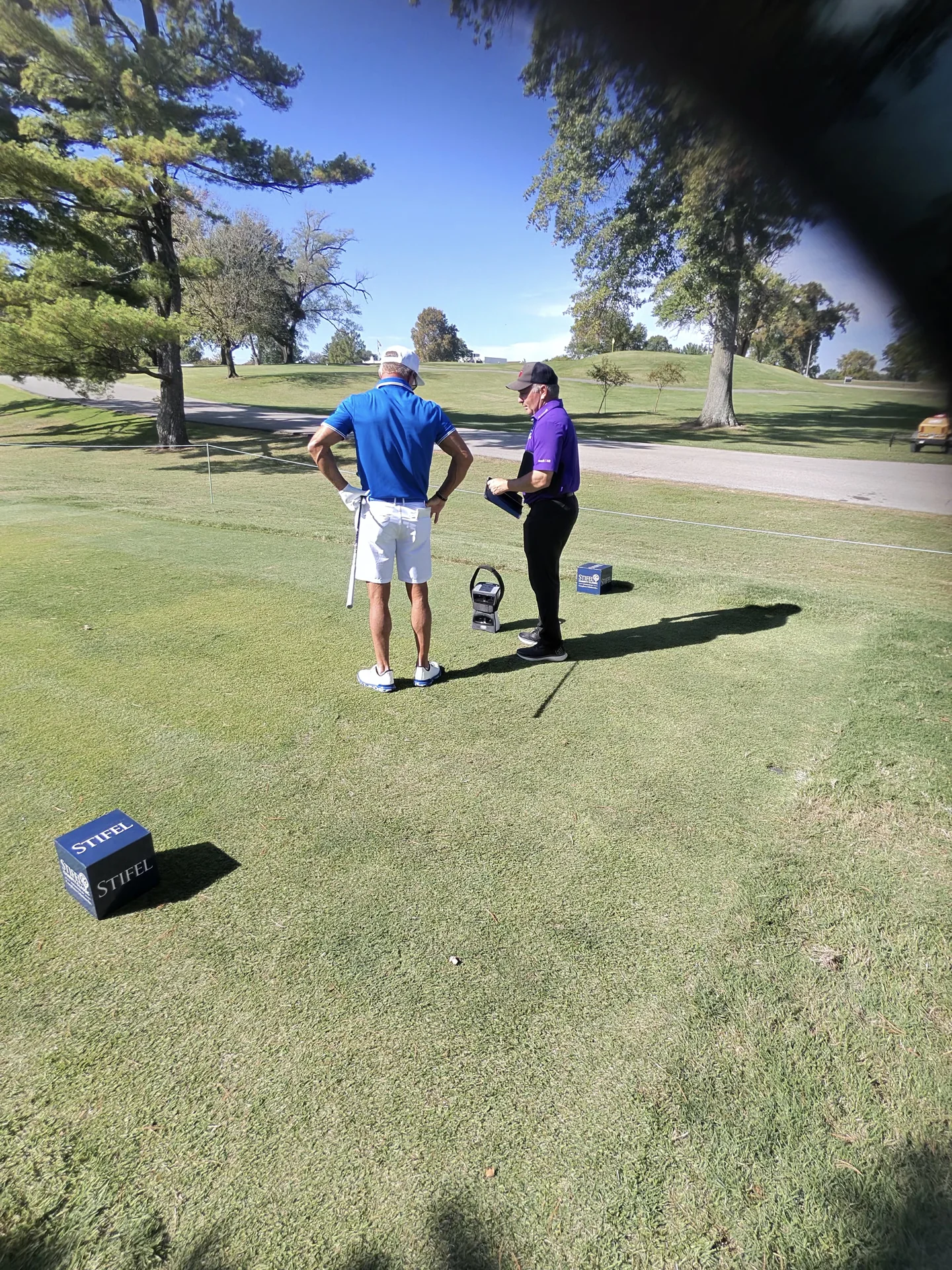
One detail that caught my attention was Stuart Appleby’s launch monitor behind the tee. I’ve always enjoyed looking at the numbers, so seeing that equipment in use added another layer to the experience.
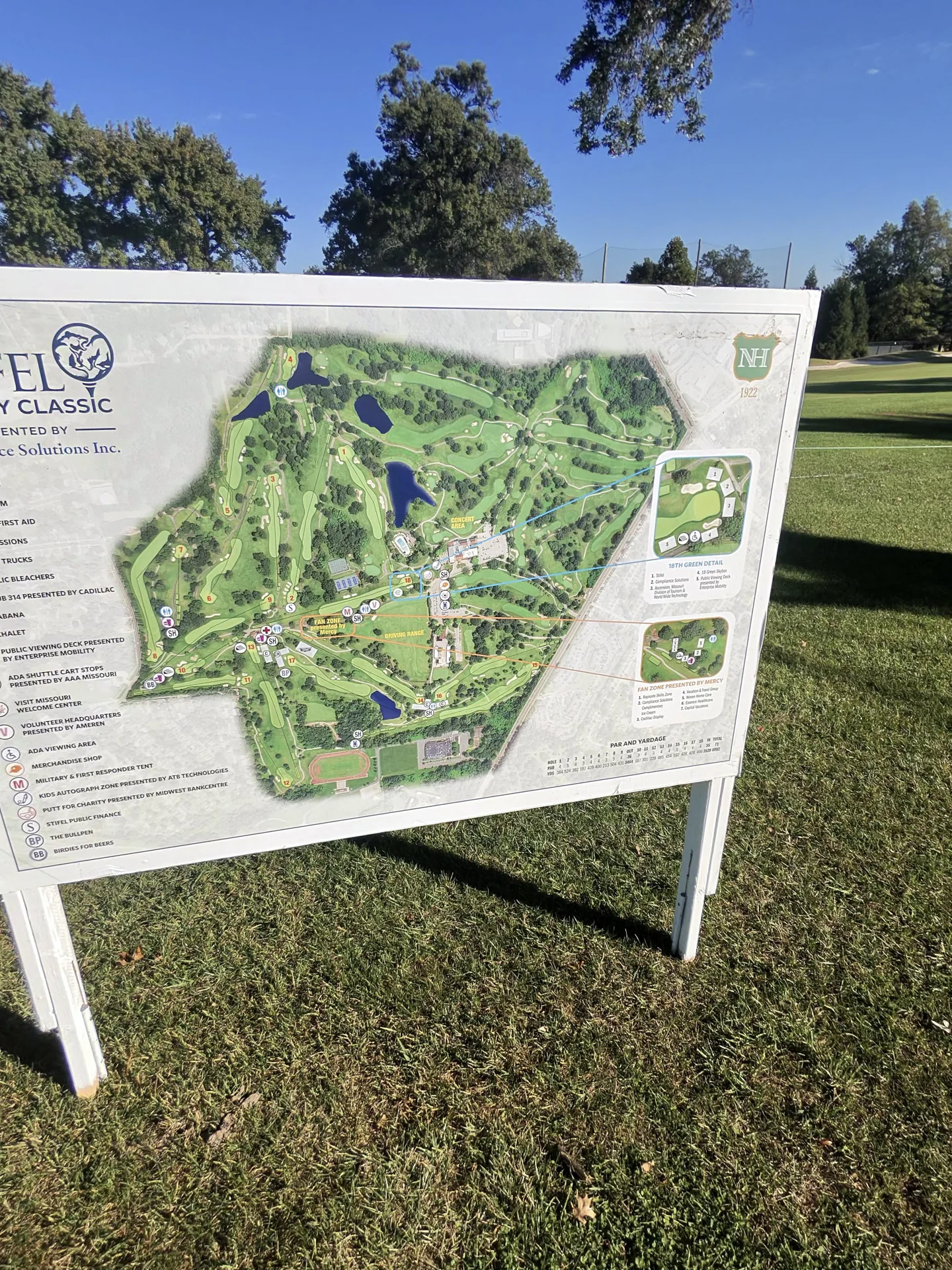
Hole 16 gave us a full range of marshal positions: tee box, fairway landing area, spectator crossing, and greenside. Earlier in the year, I had worked a par 3 at the BMW Championship. Here, I enjoyed seeing a hole unfold from tee to green.
The lesson arrived early: being assigned to one hole does not mean standing in one place all day.
Friday: the tournament gets to work
Friday brought the first competition round and a different atmosphere. It was Folds of Honor Friday, with red, white, and blue around the course, and the players were now competing for their place in the Charles Schwab Cup Playoffs.
We rotated volunteer positions after every four groups came through the hole. That gave everyone time at the different stations and shared the responsibilities across the crew.
Each station asks something different of you. On the tee, you track ball flight and communicate with the landing-area volunteers. At the crossing, you help spectators move between groups. Around the green, you pay attention to noise, movement, and player exits.
Watching the pros also provided a few lessons for my own golf game. One that stayed with me was a low shot played with a hybrid from near the green. Sometimes the useful shot is the one that gets rolling quickly.
Lunch was a Panera ham-and-cheese sandwich, eaten outdoors under a tree on a golf course.
That’s a pretty good lunch.
Sunday: the final shift and the familiar faces
Sunday was the busiest day I worked. More spectators, more activity around the cabanas, and players coming through with the tournament nearing its finish.
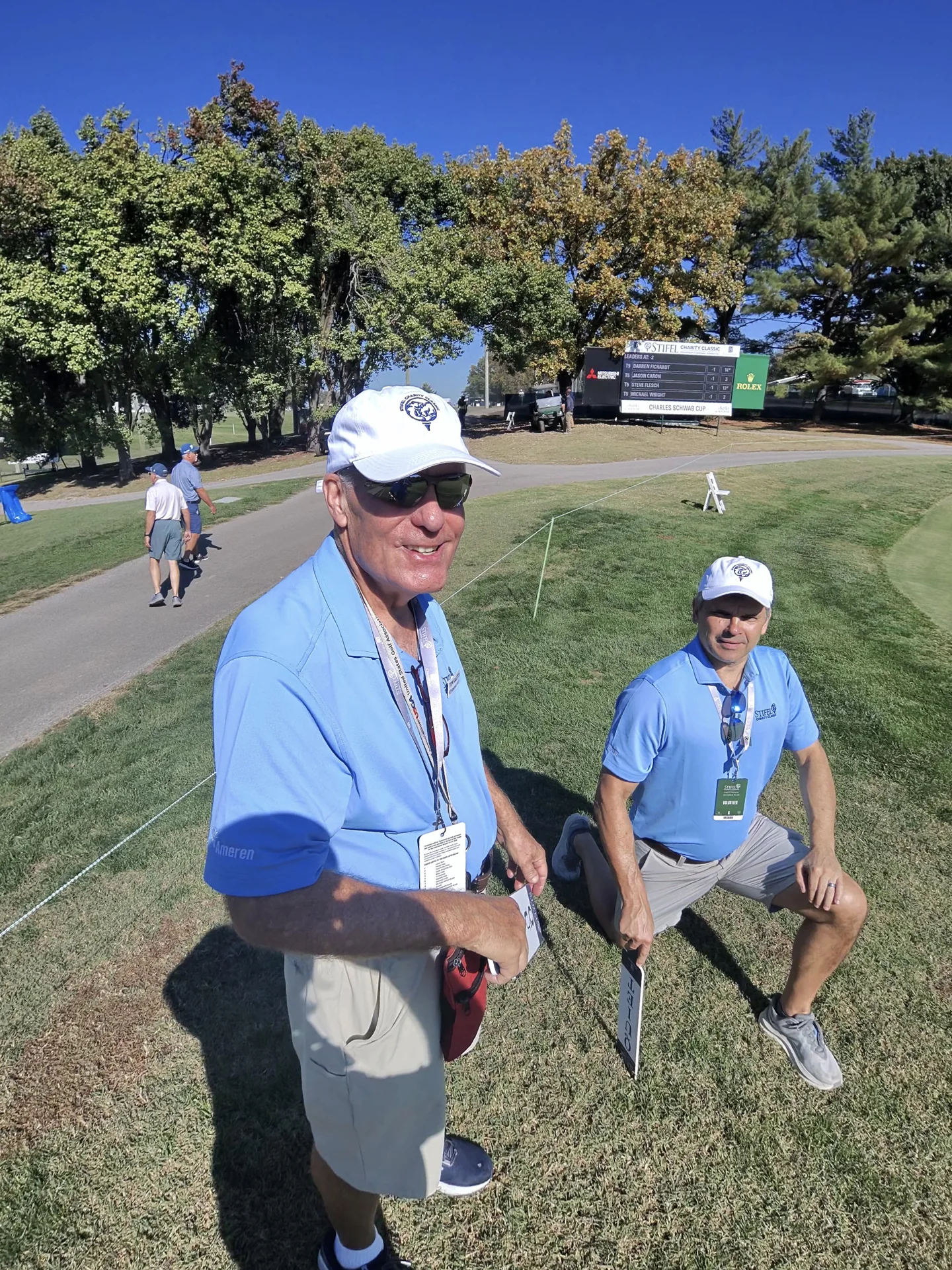
By then, the volunteer crew knew one another better. We understood the stations, the rotation, and where an extra set of hands could help.
One tee-box lesson I took away was to pay attention to how the caddies and players established their space. Being close enough to watch is a privilege; giving them room to work is part of the assignment.
My final station was the tee box for the last three groups through 16, working the orange signal paddles. Then came the small jobs that close out the week, including taking down ropes as directed.
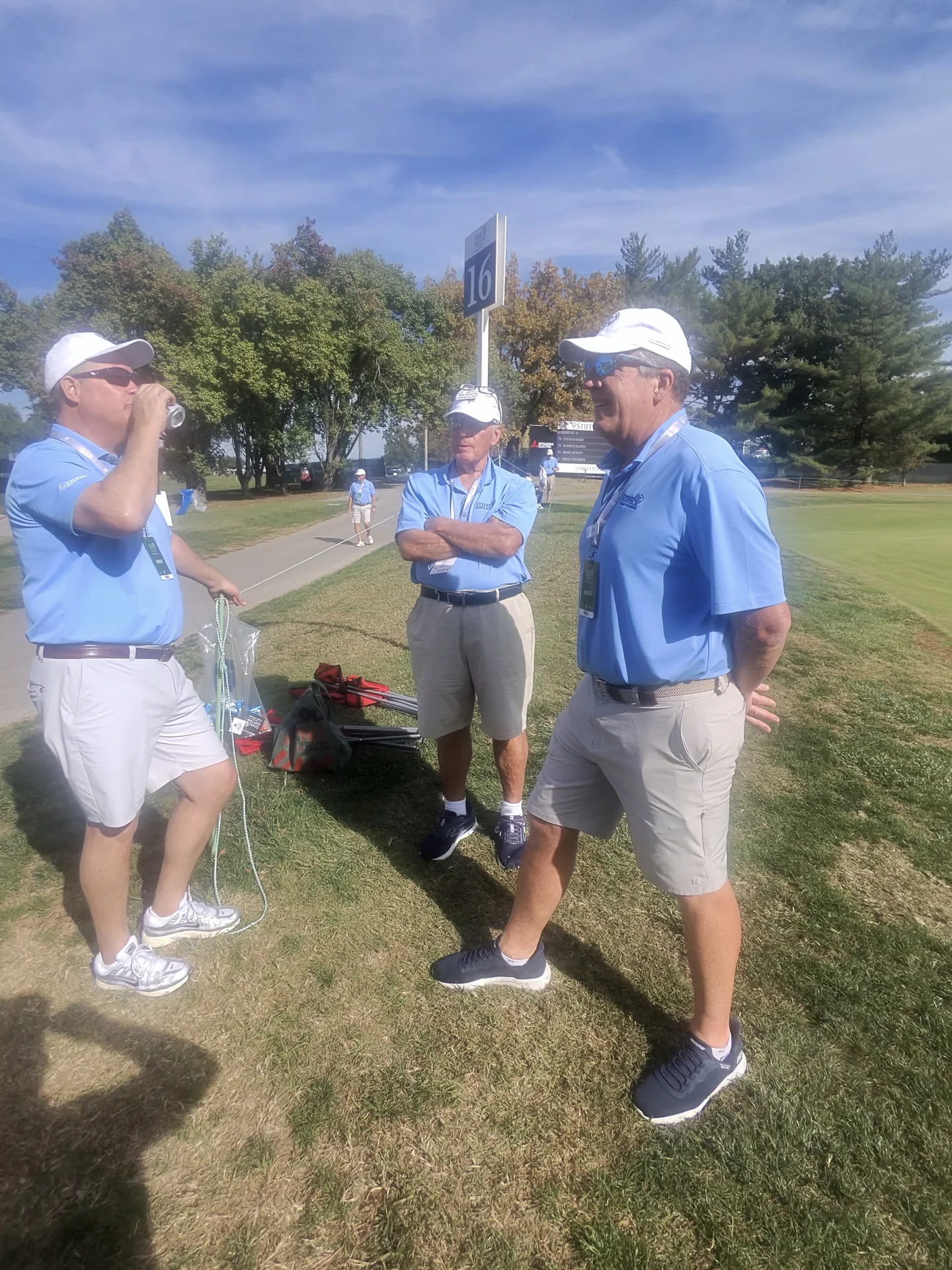
The golf was memorable. So were the conversations between groups and the people who made the shifts enjoyable.
The walking is real
Here is what I recorded across my three days:
| Shift | Miles walked |
|---|---|
| Wednesday pro-am | 6.6 |
| Friday opening round | 5.4 |
| Sunday final round | 5.6 |
| Total | 17.6 |
Those were my daily totals during the volunteer experience, including getting around the course and rotating positions.
Comfortable, broken-in shoes belong at the top of the packing list. I would also have an insulated water bottle, sun protection, a phone-charging battery, and a small folding chair when permitted by the tournament and appropriate for the assignment.
Get everything together before the week begins. The first morning is a poor time to discover that your phone battery is low or your shoes aren’t comfortable.
I’ve collected examples of the items I used in my Amazon Golf Volunteer Survival Kit. Use it as a starting point for your own tournament-week kit, and check the event’s rules for bags, chairs, and bottles.
What fellow volunteers noticed
The volunteer feedback added some useful perspective.
Comfortable shoes came up repeatedly, along with a refillable water tumbler and a phone-charging battery. Training helped establish the basics, while working alongside experienced volunteers helped fill in the details.
Player interaction varied. One volunteer recalled a two-to-three-minute conversation with Zach Johnson during Thursday’s pro-am and several players thanking volunteers during the week. Another felt the golfers mostly kept to themselves.
That is a useful expectation to carry into the experience. A conversation may become a highlight, but players are there to compete, and every group is different.
One response captured the volunteer mindset well: “Being engaged makes it more fun.”
Ric’s Rec: I’ll be back
The uniform package was good value, the access was memorable, and I enjoyed watching great golfers work from a perspective you rarely get as a spectator.
Be ready for the walking, the time commitment, and the responsibility of your station. Listen to your captain, learn from the experienced volunteers, and help cover the little jobs that keep the crew moving.
Most of all, get to know the people beside you. Every position matters, and the week is better when everyone helps one another.
I plan to return for the 2027 Stifel Charity Classic. The tournament has announced October 18–24 at Norwood Hills Country Club. Check the official volunteer page for the next round of opportunities.
Three days, one hole, and 17.6 miles later, I’m looking forward to seeing the crew again.
Product links may include affiliate links; recommendations remain based on firsthand experience.